
Bonefish Fishing Guide: Where, When & How in 2026 | One Outdoors
Affiliate disclosure: One Outdoors is reader-supported. When you book through links on our site, we may earn a referral commission at no cost to you. Learn more
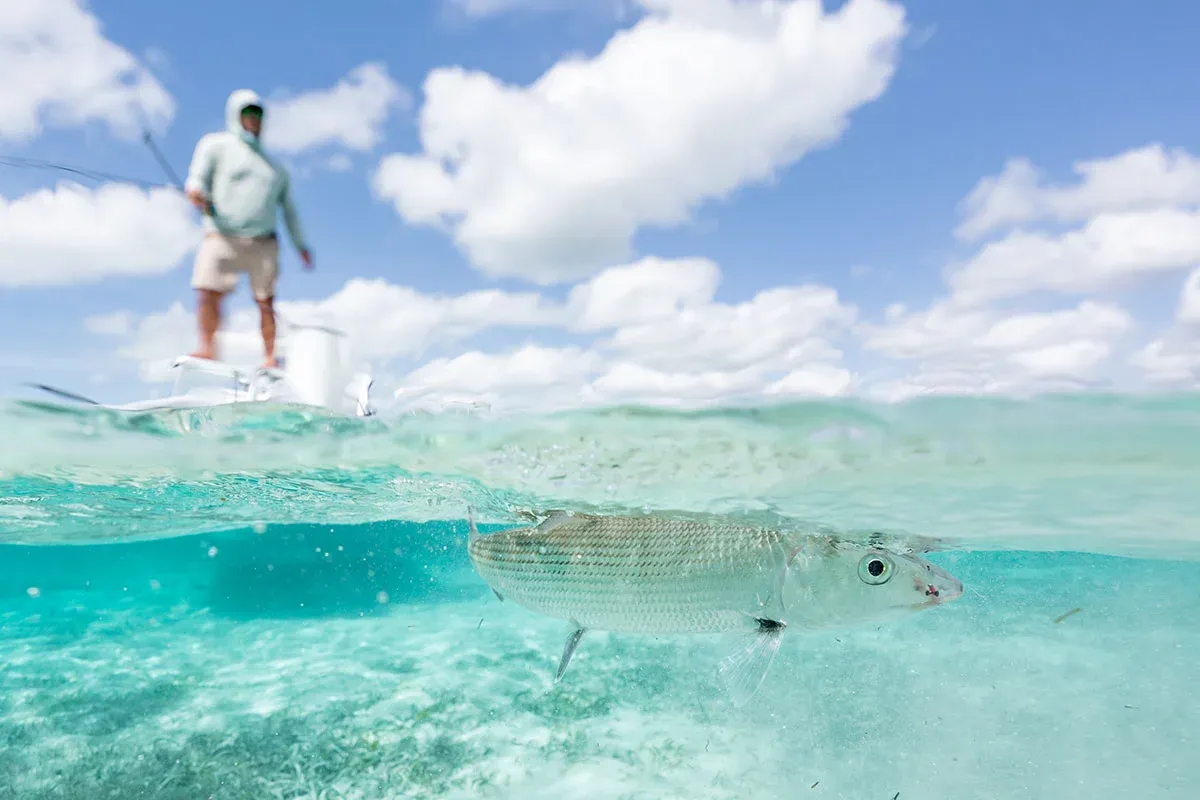
The bonefish — Albula vulpes — is the world's most popular saltwater fly fishing target. Found on shallow tropical flats from the Bahamas to the Indian Ocean, bonefish combine sight-fishing technicality, blistering runs, and accessibility into a single sport. This is the species fly anglers travel to chase, plan their dream trips around, and return to year after year.
This complete guide covers where to fish, when to fish, what tackle to use, how to spot and stalk bonefish, and how the conservation picture looks in 2026.
What is a Bonefish?
Bonefish are slim, silver-sided flats fish reaching up to 14 pounds in trophy waters. They are not actually a "bone fish" in the freshwater sense — they're a primitive saltwater species (order Albuliformes) found in nearly all tropical seas worldwide. Their flesh is virtually inedible due to fine bones (hence the name), but their fight is among the strongest pound-for-pound in fly fishing.
Physical Characteristics
| Trait | Detail |
|---|---|
| Average weight | 2–5 lb (Caribbean), 4–6 lb (Pacific/Indian Ocean) |
| Trophy weight | 8–14 lb (Hawaii, Seychelles, Mauritius) |
| All-tackle world record | 19 lb (Zululand, South Africa, 2007) |
| Lifespan | 16–19 years |
| Maximum length | 35 inches |
| Diet | Shrimp, crabs, mollusks, small baitfish |
| Habitat | Shallow flats (1–3 ft), occasionally to 30 ft |
Range
Bonefish are found in two main population centers:
- Western Atlantic (Albula vulpes): Bahamas, Florida Keys, Caribbean, Mexico, Belize, Panama, Brazil
- Indo-Pacific (Albula glossodonta and related species): Hawaii, Christmas Island, Seychelles, Mauritius, Cook Islands, Australia
- Eastern Pacific (Albula esuncula): Baja California, Costa Rica, Galapagos
Where to Fish for Bonefish
Bahamas — The Heartland
The Bahamas is the most accessible world-class bonefishery. Andros (the largest island) has 700+ square miles of flats — the highest density of bonefish habitat anywhere. Abaco, Crooked & Acklins, Grand Bahama, and the Berry Islands round out the major fisheries. Average fish: 3–5 lb. Trophies: 7–12 lb.
Best lodges: Andros South, Bair's Lodge, Mars Bay, Mangrove Cay Club, Abaco Lodge.
For full pricing and trip planning, see Bahamas fly fishing cost and fishing the Bahamas.
Belize — The Grand Slam Country
Belize is the original "Grand Slam" destination — bonefish + tarpon + permit on the same flat. Ambergris Caye, Turneffe Atoll, and the southern reef from Placencia to Punta Gorda are the productive zones. Average bonefish: 2–3 lb (smaller than Bahamas). The bonus is Grand Slam potential.
See Belize fishing trips.
Christmas Island (Kiribati) — The Numbers Game
Christmas Island, in the central Pacific, produces 50+ bonefish per day for skilled anglers. Average size: 4–6 lb. The fishery is wading-only (no skiffs), so legs are part of the equipment. The trip itself requires a 11-hour flight via Honolulu.
Seychelles — The Trophy Trip
The Seychelles' outer atolls (Alphonse, Cosmoledo, Astove, St. Brandon's) produce some of the world's largest bonefish (8–10 lb common, 12+ lb caught annually). Trip cost runs $14,000–$22,000 per week — among the most expensive fly trips in the world.
Hawaii — The Hidden Trophy
Oahu's leeward lagoons (Waiale, Kaneohe, Kahuku) hold remarkably large bonefish (5–9 lb average, 12+ trophies). Public-access wading is excellent. The major drawback: heavy local pressure and strong wind.
Mexico (Yucatan / Ascension Bay)
Ascension Bay south of Cancun is the most accessible Grand Slam water from the U.S. Average bonefish: 2–4 lb. Excellent permit and tarpon co-fishery.
When to Fish for Bonefish
Tide and wind matter more than season for bonefish. The general framework:
| Region | Best months | Why |
|---|---|---|
| Bahamas | Nov–April | Predictable trades, calm water |
| Belize | Dec–May | Lowest wind, best visibility |
| Mexico | Mar–June, Oct–Nov | Avoid hurricane season + winter fronts |
| Florida Keys | Spring + Fall | Avoid summer heat, winter cold fronts |
| Hawaii | May–Sept | Dryer, calmer trade winds |
| Seychelles | Oct–April | Northeast monsoon offers calmest water |
| Christmas Island | Year-round | Equatorial; minor seasonal variation |
Tide Strategy
Bonefish move onto flats with the rising tide and retreat with the falling. The "feeding window" is generally 2 hours before to 2 hours after high tide. Big spring tides (full moon and new moon) push fish further onto flats but also create stronger currents. Neap tides (half moon) provide gentler movement and often the best sight-fishing.
Tackle Setup
The Standard Bonefish Rig
| Component | Specification |
|---|---|
| Rod | 8-weight, 9' length, fast action, saltwater-grade |
| Reel | Saltwater-grade, sealed drag, 18+ lb max drag |
| Backing | 30-lb Dacron, 200+ yards |
| Fly line | Tropical floating, saltwater-formulated, weight-forward |
| Leader | 9–10' tapered, butt 30 lb to tippet 12–16 lb fluoro |
| Flies | Size 4–8 shrimp + crab patterns |
For trophy water (Seychelles, Mauritius, Hawaii) bump to a 9-weight rod and 16–20 lb tippet. For light tropical water (small flats, calm conditions), drop to a 7-weight.
Best Bonefish Flies
The five flies every bonefish angler should carry:
- Crazy Charlie (sizes 4, 6, 8) — the universal pattern
- Gotcha (sizes 4, 6) — for slightly stained water
- Bunny Shrimp / Bunny Bone (sizes 2, 4) — for trophy fish
- Christmas Island Special (sizes 6, 8) — heavier weight for 3+ ft of water
- Crab pattern — Borski Bonefish Slider, Avalon Crab — for permit + bonefish co-targeting
For rod and reel recommendations, see best saltwater fly rods and best fly reels.
Technique: How to Catch a Bonefish
Bonefish are sight-fish. The technique progression:
1. Spot the Fish
- Sun behind you, polarized glasses on
- Scan 30–80 ft ahead, looking for: tails breaking surface, dark shapes against light bottom, "muds" (clouds of disturbed sand from feeding)
- Shrimp the bonefish are eating create "muds" — bonefish are usually within 5 ft of fresh muds
2. The Lead
- Cast 5–10 ft ahead of the fish's direction of travel
- Faster fish need bigger leads (10–15 ft)
- Tailing fish moving slowly: 3–5 ft lead
3. The Strip
- Let the fly sink (count 1–3 depending on depth)
- Strip in 3–6 inch increments
- "Long strip, pause, short strip" mimics fleeing shrimp
- Strip at the speed the fish is moving — match its eating rhythm
4. The Set
- Strip-set, never trout-set (don't lift the rod)
- Pull the line firmly with stripping hand while keeping rod tip low
- Once hooked, let the fish run — line through fingers until on the reel
5. The Fight
- The first run is the longest (50–100+ yards)
- Don't try to stop it; apply moderate drag and let the reel work
- Most bonefish fights are won within 60–90 seconds after the first run
Conservation
Bonefish are catch-and-release-only in nearly every jurisdiction. Best practices:
- Land fish quickly (under 60 seconds); long fights cause lactic acid buildup
- Keep fish in the water during photography
- Pinch barbs on hooks
- Avoid touching the fish's gills or removing slime coat
- Release with fish facing into current; let it swim out of your hand
The IUCN classifies bonefish as "Near Threatened." Florida Keys populations have declined 40–60% since 1980 due to coastal development and water quality. Bahamas and Christmas Island populations remain healthy. Belize permits commercial fishing at the network periphery, leading to localized declines.
Related Guides
- Bahamas Fly Fishing Cost
- Fishing the Bahamas
- Belize Fishing Trips
- Tarpon Fishing Guide
- Permit Fishing Guide
- Best Saltwater Fly Rods
- Best Fly Reels
- Inshore Fishing Guide
Frequently Asked Questions
What is a bonefish?
Albula vulpes is a saltwater flats species found in tropical and subtropical waters worldwide. Bonefish average 2–5 lb in the Bahamas and Caribbean, 3–6 lb on Christmas Island and Seychelles, and up to 8–14 lb in trophy waters (Hawaii, Mauritius, deep-water schools). They feed on shrimp, crabs, and small baitfish on shallow flats — typically 1–3 feet of water — and are known for blistering 100+ yard runs when hooked. Bonefish are catch-and-release-only in most jurisdictions.
Where is the best place to fly fish for bonefish?
For sheer numbers and accessibility: Bahamas (Andros, Abaco, Crooked & Acklins). For trophy fish (8+ lb): Hawaii's Oahu lagoons, Seychelles (St. François Atoll), Mauritius, and Zululand, South Africa. For numbers + size combo: Christmas Island (Kiribati). For bonefish + tarpon + permit Grand Slam: Belize, Mexico (Yucatan/Ascension Bay), Bahamas. The Bahamas is the consensus best first-trip — easy access, world-class infrastructure, lowest premium pricing.
What tackle do I need for bonefish?
Standard bonefish setup: 8-weight 9' fly rod (saltwater-grade), saltwater fly reel with sealed drag and 200+ yds of 30-lb backing, tropical floating fly line (saltwater-formulated), 9–10' tapered leader to 12–16 lb fluorocarbon tippet. Flies: small Crazy Charlies, Gotchas, Crab patterns, and Bunny shrimp in size 4–8. Polarized glasses (amber lenses essential). Long-billed cap. Quick-dry pants. Reef boots or wading boots for wading flats.
When is the best time to fish for bonefish?
Peak season varies by location. Bahamas/Caribbean: October through May (peak November–April when winds are most predictable). Hawaii: year-round, with summer (May–September) being the dryest months. Christmas Island: year-round. Seychelles: October through April. Mauritius: October through April. Avoid hurricane season (August–October) for the western Atlantic. Wind matters more than temperature — pick locations with calm, predictable trade winds for your target weeks.
How do bonefish behave?
Bonefish are sight-feeders that move onto shallow flats with the rising tide and retreat to deeper channels with the falling tide. They feed in schools (1–50+ fish) on bonefish food (shrimp, crabs) and respond to the disturbance of feeding by tailing — the tail breaks the surface as the fish noses down to dig in the sand. Tailing fish are the easiest to spot and stalk. They spook easily on calm flats; cast 5–10 ft ahead of moving fish and let the fly settle, then strip slowly.
What is a 'Grand Slam' bonefish trip?
A bonefish + tarpon + permit catch in the same day (or trip, depending on definition). The realistic Grand Slam waters are: Bahamas (Bimini, North Andros), Belize (Ambergris Caye, Turneffe Atoll), Mexico (Ascension Bay), Florida Keys (Islamorada), and Cuba (Cayo Largo). The tarpon and permit components are dramatically harder than the bonefish; most attempts produce 1 grand slam per 8–10 fishing days. See our [Bahamas fly fishing cost guide](/guides/bahamas-fly-fishing-cost).
Are bonefish endangered?
Bonefish populations have declined sharply in heavily-pressured fisheries (Florida Keys, Belize tourist zones) due to climate change, water quality issues, and shore development. The IUCN classifies bonefish as 'Near Threatened.' Catch-and-release is legally mandatory in nearly all bonefish jurisdictions; many lodges follow stricter handling protocols (no removing fish from water, no dry-handling, immediate release). The healthiest populations remain in Bahamas, Christmas Island, and Seychelles.
Top Fishing Trips
Hand-selected lodges matching this guide

North Riding Point, Grand Bahama, Bahamas
North Riding Point is one of the finest bonefish lodges in the Bahamas, providing access to one of the best trophy bonefish fisheries in the world on Grand Bahama Island.

Stella Maris Resort Club and Marina Long Island, Bahamas
Stella Maris Resort Club and Marina on Long Island in the Bahamas is an intimate plantation-style out island hotel providing the perfect Bahamas resort getaway for leisure travelers and active water sportsmen.

Mangrove Cay Club, Andros Island, The Bahamas
Premier saltwater fly fishing lodge on Andros Island offering access to the world's largest bonefish habitat with luxury beachfront accommodations and gourmet meals.

Tongario Lodge, New Zealand, North Island
Tongariro Lodge is one of the world's great fishing lodges, located on the banks of the legendary Tongariro River with year-round guided fly fishing for browns and rainbows.

Tarraleah Lodge, Tasmania
Tarraleah Lodge is one of the Top Twenty Most Luxurious Fishing Lodges in the World, featuring Art Deco accommodations with access to pristine Tasmanian trout fishing.

Southern Lakes Fishing Safaris, New Zealand
Southern Lakes Fishing Safaris provides guided fly fishing for Brown and Rainbow trout in the Southern Lakes region of New Zealand's South Island, encompassing three World Heritage National Parks based out of Wanaka.