
Caliber by Species: The Complete Hunting Cartridge Chart
Affiliate disclosure: One Outdoors is reader-supported. When you buy through links on our site, we may earn an affiliate commission at no cost to you. Learn more
The right caliber for the job is a question with as many answers as there are hunters. This chart cuts through the noise — every common North American and African huntable species, the energy required for an ethical kill, the realistic minimum caliber, the recommended sweet-spot caliber, and the over-gunned-but-valid heavy options.
The ballistic numbers below are at typical hunting ranges (200–300 yards) using premium controlled-expansion bullets. Specific load data and trajectory tables are linked at the bottom.
How to Read This Chart
| Column | What it means |
|---|---|
| Energy needed | Generally accepted minimum kinetic energy at impact for ethical, quick kills |
| Minimum caliber | The smallest cartridge that, with proper shot placement, is widely considered ethical |
| Recommended | The sweet-spot cartridge that balances flat trajectory, recoil, ammunition availability, and margin for error |
| Heavy option | Magnum class for longer shots, larger specimens, or worst-case angles |
Energy at impact must be calculated for your specific ammunition, barrel length, and intended shot distance. The recommendations below assume premium hunting ammunition (Hornady Precision Hunter, Federal Premium, Barnes VOR-TX, Nosler Trophy Grade).
North American Big Game
| Species | Energy needed at impact | Minimum caliber | Recommended | Heavy option |
|---|---|---|---|---|
| Whitetail Deer | 800 ft-lb | .243 Winchester | .30-06 / .308 Win / 6.5 Creedmoor | .300 Win Mag |
| Mule Deer | 1,000 ft-lb | .25-06 Remington | .30-06 / .270 Win / 6.5 PRC | .300 Win Mag |
| Pronghorn Antelope | 800 ft-lb | .243 Winchester | 6.5 Creedmoor / .25-06 | .270 Winchester |
| Black Bear | 1,200 ft-lb | .270 Winchester | .30-06 / .308 Win / .300 Win Mag | .338 Win Mag |
| Brown / Grizzly Bear | 2,500 ft-lb | .300 Win Mag | .338 Win Mag / .375 H&H | .416 Rigby / .375 RUM |
| Elk | 1,500 ft-lb | 6.5 Creedmoor | .30-06 / 7mm Rem Mag / .300 Win Mag | .338 Win Mag / 28 Nosler |
| Moose | 2,000 ft-lb | .30-06 Springfield | .300 Win Mag / .338 Win Mag | .375 H&H Magnum |
| Caribou | 1,200 ft-lb | .270 Winchester | .30-06 / 6.5 PRC | .300 Win Mag |
| Mountain Goat | 1,500 ft-lb | .270 Winchester | .30-06 / 7mm Rem Mag | .300 Win Mag |
| Bighorn / Dall Sheep | 1,500 ft-lb | .270 Winchester | .30-06 / 7mm Rem Mag | .300 Win Mag |
| Bison | 2,500 ft-lb | .300 Win Mag | .338 Win Mag / .375 H&H | .416 Rigby / .458 Win Mag |
| Mountain Lion / Cougar | 800 ft-lb | .243 Winchester | .30-06 / .308 Win | .300 Win Mag (over-gunned but valid for larger toms) |
| Wild Boar / Hog | 1,000 ft-lb | .243 Winchester | .30-06 / .308 Win / 6.5 Creedmoor | .300 Win Mag |
For deeper context on each species, see our big game hunting guide, deer hunting guide, and elk hunting trips.
African Plains Game
Most reputable Professional Hunters require minimum .270 caliber for plains game. Premium bullet construction is more important than raw cartridge size.
| Species | Energy needed | Minimum caliber | Recommended | Heavy option |
|---|---|---|---|---|
| Impala | 1,200 ft-lb | .243 Winchester | .30-06 / 7mm-08 | .308 Win / 7mm Rem Mag |
| Springbuck | 1,000 ft-lb | .243 Winchester | .25-06 / .270 Win | .30-06 |
| Warthog | 1,200 ft-lb | .270 Winchester | .30-06 / .308 Win | .300 Win Mag |
| Blesbok / Bontebok | 1,200 ft-lb | .270 Winchester | .30-06 / 7mm Rem Mag | .300 Win Mag |
| Reedbuck / Bushbuck | 1,200 ft-lb | .270 Winchester | .30-06 / 7mm Rem Mag | .300 Win Mag |
| Kudu | 1,500 ft-lb | .270 Winchester | .30-06 / 7mm Rem Mag / .300 Win Mag | .375 H&H |
| Gemsbok / Oryx | 1,800 ft-lb | .30-06 Springfield | .300 Win Mag / .338 Win Mag | .375 H&H |
| Blue Wildebeest | 1,800 ft-lb | .30-06 Springfield | .300 Win Mag | .338 Win Mag / .375 H&H |
| Black Wildebeest | 1,500 ft-lb | .270 Winchester | .30-06 / .300 Win Mag | .338 Win Mag |
| Zebra (Hartmann / Burchell's) | 2,000 ft-lb | .30-06 Springfield | .300 Win Mag / .338 Win Mag | .375 H&H |
| Eland | 2,500 ft-lb | .300 Win Mag | .338 Win Mag / .375 H&H | .416 Rigby |
| Sable | 2,000 ft-lb | .30-06 Springfield | .300 Win Mag | .375 H&H |
| Roan | 2,000 ft-lb | .30-06 Springfield | .300 Win Mag / .338 Win Mag | .375 H&H |
| Hartebeest | 1,500 ft-lb | .270 Winchester | .30-06 / .300 Win Mag | .338 Win Mag |
| Waterbuck | 1,800 ft-lb | .30-06 Springfield | .300 Win Mag | .338 Win Mag / .375 H&H |
| Nyala | 1,500 ft-lb | .270 Winchester | .30-06 / 7mm Rem Mag | .300 Win Mag |
For a typical first plains-game safari covering 4–6 species (impala, kudu, gemsbok, blesbok, wildebeest, warthog), a single .300 Win Mag with premium 180-grain bullets is the most versatile choice. See our South Africa hunting cost guide for trip planning.
African Dangerous Game
Most African countries legally require .375 H&H Magnum minimum for dangerous game. Many PHs prefer larger.
| Species | Minimum caliber (legal) | Recommended | Bullet type |
|---|---|---|---|
| Cape Buffalo | .375 H&H Magnum | .416 Rigby / .416 Remington / .458 Winchester Mag | Soft-point first shot, Solid (full metal) follow-ups |
| Leopard | .375 H&H Magnum (most countries) | .375 H&H or .300 Win Mag (where permitted) | 270-300 gr soft-point |
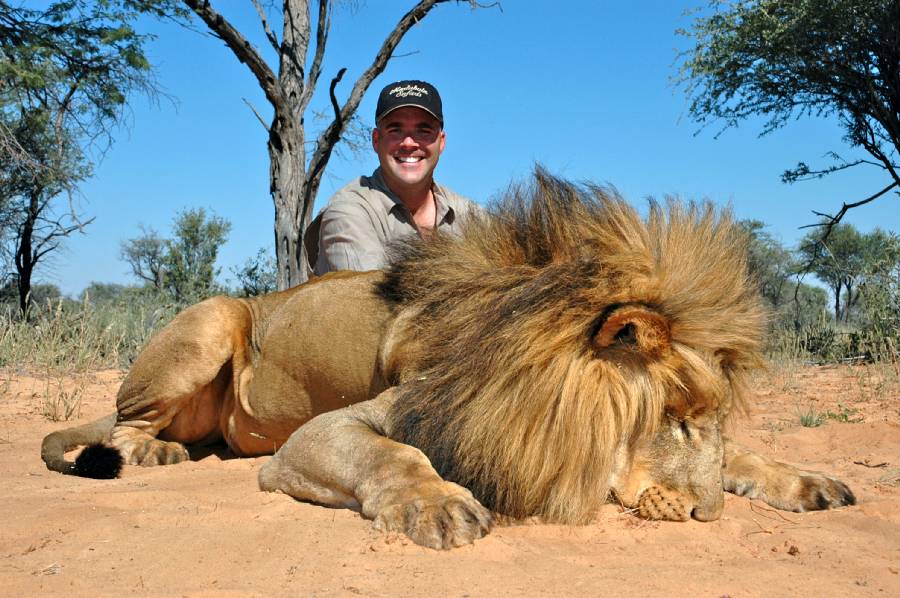
| Lion | .375 H&H Magnum | .416 Rigby / .375 Ruger | Premium soft-point |
| Elephant | .375 H&H Magnum (legal min) | .416 Rigby / .458 Lott / .470 Nitro Express | Solid bullet always — required for brain shot |
| Hippopotamus | .375 H&H Magnum | .416 Rigby / .458 Winchester Mag | Soft-point in water; Solid for skull shot |
| White / Black Rhino | .375 H&H (where huntable) | .416 Rigby / .458 Lott | Solid |
| Crocodile | .375 H&H Magnum | .375 H&H or .300 Win Mag | Premium soft-point — brain shot |
The most versatile single dangerous-game rifle is a quality .416 Rigby or .416 Remington Magnum bolt-action. Adequate for everything legally huntable on the continent. The .375 H&H is more popular and remains the entry-level choice; the gap between the two is debated endlessly but practically negligible inside 100 yards.
Wingshooting (Shotgun Gauge)
Caliber doesn't apply to wingshooting; gauge does.
| Species | Recommended gauge | Choke | Shot size |
|---|---|---|---|
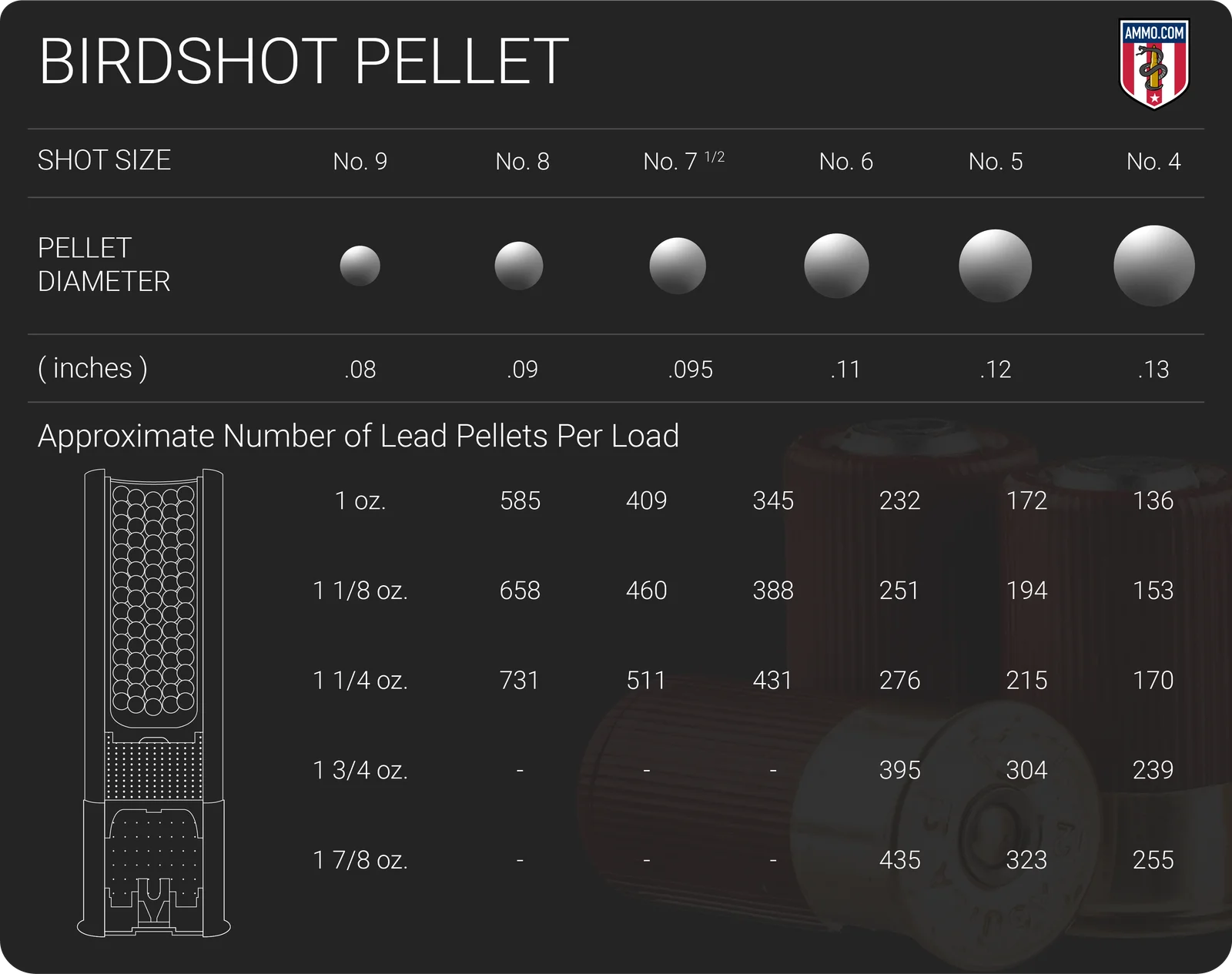
| Doves (Argentina / US) | 20 / 28 gauge | Improved Cylinder | #7.5 or #8 |
| Quail | 20 / 28 gauge | Improved Cylinder | #7.5 or #8 |
| Pheasant | 12 / 20 gauge | Modified | #5 or #6 |
| Grouse | 12 / 20 gauge | Improved Cylinder | #7.5 |
| Ducks (decoys) | 12 gauge | Modified | #2 or #4 steel |
| Ducks (pass-shooting) | 12 gauge (3" magnum) | Improved Modified | BB or #2 steel |
| Geese | 12 gauge (3" or 3.5") | Modified | BB or BBB steel |
| Turkey | 12 gauge (3" or 3.5") | Extra Full / Turkey | #4, #5, or TSS #9 |
For more wingshooting context: waterfowl hunting, upland hunting, turkey hunting, best shotguns for hunting.
Bullet Construction Matters as Much as Caliber
The same .300 Winchester Magnum can be brilliant or borderline depending on the bullet. Premium controlled-expansion bullets perform far better than commodity rounds.
| Bullet type | When to use |
|---|---|
| Lead-tipped soft point (Remington Core-Lokt, Hornady InterLock) | Whitetail, antelope, smaller plains game at typical ranges |
| Bonded soft point (Federal Trophy Bonded, Swift Scirocco) | Elk, mule deer, mid-size plains game; stays together on heavy bone |
| Monolithic (Barnes TSX/TTSX, Hornady GMX) | All-around, great penetration; ideal for elk through eland |
| Partition (Nosler Partition, Swift A-Frame) | The classic dangerous-game-adjacent bullet; deep penetration with reliable expansion |
| High-BC match hunting (Hornady ELD-X, Berger VLD Hunting) | Long-range shots; excellent for open-country mule deer, antelope, sheep |
| Solid / FMJ (Barnes Solid, Trophy Bonded Solid) | Required for elephant brain shot; second/follow-up on buffalo |
For first-timers: pick Barnes VOR-TX or Federal Trophy Bonded Tip in your chosen cartridge. Both are universally adequate and take guesswork out of the equation.
Long-Range Considerations
The chart above assumes shots inside 400 yards. Beyond that, energy drops faster than most hunters realize:
| Cartridge | Energy at 200 yd | Energy at 400 yd | Energy at 600 yd |
|---|---|---|---|
| .243 Win (95 gr) | 1,540 ft-lb | 1,000 ft-lb | 620 ft-lb |
| 6.5 Creedmoor (143 gr ELD-X) | 2,000 ft-lb | 1,540 ft-lb | 1,170 ft-lb |
| .270 Win (140 gr) | 2,150 ft-lb | 1,560 ft-lb | 1,100 ft-lb |
| .30-06 (165 gr) | 2,160 ft-lb | 1,540 ft-lb | 1,080 ft-lb |
| .300 Win Mag (180 gr) | 2,860 ft-lb | 2,140 ft-lb | 1,560 ft-lb |
| .338 Win Mag (225 gr) | 3,600 ft-lb | 2,720 ft-lb | 2,030 ft-lb |
| .375 H&H (270 gr) | 3,600 ft-lb | 2,490 ft-lb | 1,690 ft-lb |
For shots beyond 500 yards on big game, .300 Win Mag or larger is the practical floor. Below 6.5mm caliber, ethical effective range maxes out around 350–400 yards on elk-sized game.
Recoil Comparison
For new hunters or those building toward heavier calibers, recoil matters:
| Cartridge | Free recoil energy (ft-lb, 8 lb rifle) |
|---|---|
| .243 Winchester | 8.8 |
| 6.5 Creedmoor | 12.5 |
| .270 Winchester | 16.5 |
| .308 Winchester | 17.5 |
| .30-06 Springfield | 20.6 |
| 7mm Remington Magnum | 23.0 |
| .300 Winchester Magnum | 25.5 |
| .338 Winchester Magnum | 33.0 |
| .375 H&H Magnum | 38.0 |
| .416 Rigby | 56.0 |
A muzzle brake or quality recoil pad reduces felt recoil 20–35%. A suppressor (where legal) cuts noise and felt recoil 25–35%.
Related Guides
- Hunting Caliber Guide — extended pillar with terminal-ballistics deep dive
- Best Hunting Rifles — by caliber and price tier
- Ballistics Chart for Hunting — trajectory tables
- .308 vs .30-06 — head-to-head comparison
- 6.5 Creedmoor vs .308
- African Hunting Safari Cost
Frequently Asked Questions
What is the best all-around hunting caliber?
The .30-06 Springfield remains the most versatile single-caliber choice for North American big game — adequate for whitetails through moose with proper bullet selection, ammunition available everywhere, manageable recoil. Modern alternatives that match or exceed it: .308 Winchester (slightly less velocity, more rifle options), 6.5 Creedmoor (flatter shooting, less recoil, capable on game up to elk), and .300 Winchester Magnum (more capable on large game and longer shots, more recoil).
What is the minimum caliber for elk?
Most state regulations specify .24 caliber or larger (6mm), though practical minimum is .270 Winchester or 6.5 PRC. Many wildlife biologists recommend 6.5 Creedmoor as the realistic minimum for ethical elk harvest — adequate energy at typical 150-300 yard ranges with premium bullets (Barnes TSX, Nosler Partition, Hornady ELD-X). Below 6.5mm requires very precise shot placement; above .30 caliber adds insurance margin without significant practical advantage.
What caliber is required for African Cape Buffalo?
Most African countries require .375 H&H Magnum minimum for any dangerous game (buffalo, lion, elephant). Some allow .338 Win Mag or .35 Whelen as minimums but most professional hunters strongly prefer .375 or larger. Common buffalo calibers above the minimum: .416 Rigby, .416 Remington, .404 Jeffery, .458 Winchester Magnum, .458 Lott. Solid (non-expanding) bullets are required for the second/follow-up shot to ensure deep penetration.
Is 6.5 Creedmoor enough for elk?
Yes, with appropriate ammunition and proper shot placement at typical hunting ranges (out to 400 yards). The 6.5 Creedmoor delivers approximately 1,100 ft-lb of energy at 400 yards with 143-grain match-grade bullets — above the commonly cited 1,000 ft-lb threshold for elk. Use premium controlled-expansion bullets (Hornady ELD-X, Berger VLD Hunting, Barnes LRX) and place shots in the heart-lung pocket. The 6.5 PRC is a notable upgrade for those wanting more energy and similar recoil.
What caliber for whitetail deer hunting?
Whitetails are forgiving — almost any centerfire from .243 Winchester through .30-06 will work cleanly with proper bullet selection. Most popular: .30-06, .308 Win, .270 Win, 6.5 Creedmoor. For new hunters or recoil-sensitive: .243 Winchester, 6.5 Creedmoor, .25-06, or .270 Winchester. Bow hunters: 60+ lb compound or any modern crossbow. Eastern brush country: shorter, brushier rounds like .30-30 Winchester remain effective inside 200 yards.
What's the best caliber for African plains game?
For representative plains game (kudu, impala, gemsbok, blesbok, wildebeest), .30-06 Springfield, .308 Winchester, .300 Winchester Magnum, and 7mm Remington Magnum are the most popular and effective options. Bullet selection matters more than caliber — use 165-180 grain controlled-expansion bullets (Barnes TTSX, Nosler Partition, Swift A-Frame). For larger plains game (eland, sable, kudu trophy bulls), .300 Win Mag or .375 H&H provides more margin. Most professional hunters require minimum .270 caliber for large plains game.
Do I need a different caliber for African dangerous game vs plains game?
Yes. Plains game can be cleanly taken with .270-.300 magnum class. Dangerous game (buffalo, leopard, lion, elephant) typically requires .375 H&H Magnum or larger by law in most African countries, and is required by every reputable Professional Hunter regardless of legal minimum. Many hunters bring two rifles: a plains-game caliber (.300 Win Mag or 7mm Rem Mag) and a dangerous-game caliber (.375 H&H or .416). For combination hunts, .375 H&H alone is adequate for both with appropriate bullet selection.
Top Hunts
Hand-selected lodges matching this guide
North Sask Frontier Adventures Saskatchewan, Canada
Family-owned hunting preserve in Saskatchewan's Boreal Forest offering trophy elk, bison, deer, caribou, and wild boar on 1,000 acres with Five Star Lodge accommodations.
Ringneck Ranch, Tipton, Kansas – USA
Ringneck Ranch is located in Tipton, Kansas on a 5th generation family homestead encompassing over 10,000 acres of fine native pheasant, bobwhite and prairie chicken habitat.